Showing posts with label cornmeal. Show all posts

Friday, March 24, 2017

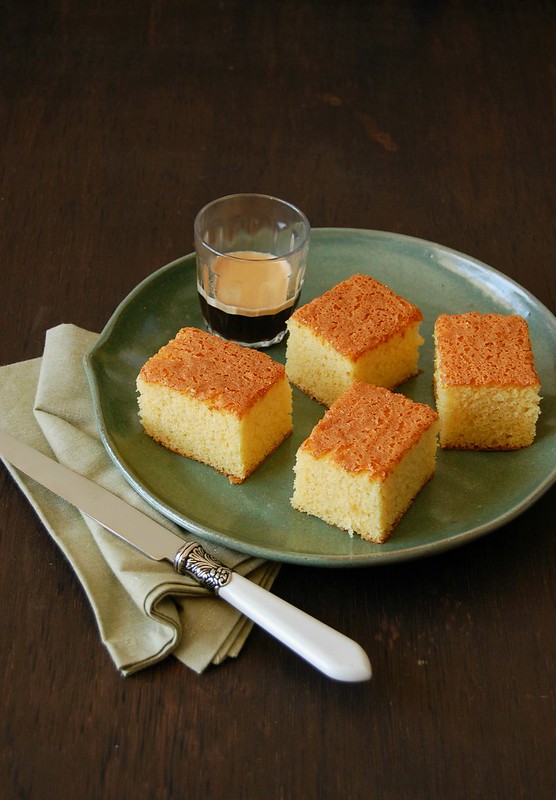
Bolo de fubá (Brazilian corn flour cake) - the first recipe I made in life

Bolo de fubá da tia Angélica / Brazilian corn flour cake

Most of you already know that I started cooking at a very early age – it was purely out of necessity, but it became a true passion over the years. The first recipe I ever learned how to make was this corn flour cake, or “bolo de fubá”, and it was my great-aunt Angelica who taught me how to make it – she would then after that cake teach me how to cook all sorts of food, mostly by phone. <3

I hadn’t baked her cake for several years for I no longer had her recipe, but after searching all over my place, including very old notebooks I finally found it – it is really, really delicious and exactly how I remembered it: tasty and very light in texture.

I have made other cornmeal cakes over the past years, but this is the one that got me in the kitchen for the first time ever in my life, the recipe that showed me how magical and wonderful cooking and baking can be – if it wasn’t for this cake, this blog would probably not exist, and that makes this recipe even more special for me.

Bolo de fubá (Brazilian corn flour cake)
my great-aunt Angelica’s recipe

1 cup (140g) all purpose flour
1 cup (120g) corn flour (fine cornmeal - fubá) – not corn starch, the same corn flour used in these tartlets
1 tablespoon baking powder
pinch of salt
4 large eggs
1 cup + 2 tablespoons (224g) granulated sugar
¾ cup (180ml) canola oil
1 cup (240ml) very hot whole milk

Preheat the oven to 180°C/350°F. Butter and flour a 20x30cm (8x12in) rectangular baking pan.

In a medium bowl, whisk together the all purpose flour, corn flour, baking powder and salt. Set aside.
In a large bowl, using an electric mixer with the whisk attachment, whisk the eggs on medium speed until foamy. Gradually beat in the sugar, and then beat the mixture on high until thick, glossy and very light in color – scrape the sides of the bowl occasionally during the making of the recipe. Turn down the speed to medium and slowly pour in the oil down the sides of the bowl, then beat to combine. On low speed, gradually add the dry ingredients and mix only until incorporated – do not overmix to avoid losing the air previously incorporated in the batter. Gently stir in the milk with a rubber spatula. Pour batter into prepared pan and bake for35-40 minutes or until risen and golden and a skewer inserted in the center of the cake comes out clean. Cool completely in the pan over a wire rack.

Cake can be kept in an airtight container at room temperature for up to 3 days.

Serves 20

Tuesday, July 2, 2013

Lemon cornmeal cake with lemon glaze and the book I'll read next

Lemon cornmeal cake with lemon glaze / Bolo de milho e limão siciliano com glacê de limão siciliano

Thank you for your comments on my issue with “The Great Gatsby” – I feel much better now. :)
I already have something else to read, Somerset Maugham’s "Of Human Bondage", a book suggested by my good friend Cristina – I’ll try to balance it with my cookbooks since I don’t plan on stop cooking and baking.

I started cooking when I was very young and my grandmother and my great-aunt would give me instructions over the phone, which I would carefully and in a very detailed way write down to follow in the kitchen afterwards. If anything, anything at all turned out differently from the ladies’ information I would call them immediately so they could help me solve the problem. I can’t tell you how many days were spent that way – those women are somehow responsible for all the treats you guys see here on this blog. They were the ones that kept me going, even after small disasters in the kitchen. And now, after many, many years, I continue to prepared food, and that gives me tons of pleasure. The more I cook and bake the more I feel confident enough to make changes, to adapt recipes – I guess that maybe you feel the same way. This cake, for instance, called for mascarpone to be mixed into the batter, but I decided to use heavy cream instead, since the Italian cheese is made with cream. It worked really well: the cake turned out fantastic, tender and full of lemon flavor, thanks to the syrup poured over it while still hot from the oven. And to make this recipe even more perfect, the butter is melted, so there is no need to wait for it to soften (which can take forever in the cold days we’ve been having here).

I guess both grandma and aunt Angelica would be proud. :)

Lemon cornmeal cake with lemon glaze
slightly adapted from the delicious The Dahlia Bakery Cookbook: Sweetness in Seattle

Cake:
220g all-purpose flour
115g medium-ground yellow cornmeal – I used polenta
finely grated zest of 2 lemons
1 teaspoon baking powder
1/8 teaspoon table salt
2/3 cup (160ml) heavy cream
4 large eggs
265g granulated sugar
1 teaspoon vanilla extract
½ cup (113g/1 stick) unsalted butter, melted and slightly cooled

Lemon syrup:
½ cup (120ml) fresh lemon juice
1/3 cup (67g) granulated sugar

Lemon glaze:
175g confectioners’ sugar
2 tablespoons heavy cream
1 tablespoon fresh lemon juice

Preheat the oven to 180°C/350°F. Butter a 23cm (9in) round cake pan, line it with a circle of baking paper and butter the paper as well.
In a medium bowl, whisk together the flour, cornmeal, zest, baking powder, and salt.
Place the cream in a large bowl. Whisk in the eggs, one at a time, then the sugar and vanilla. Fold in the dry ingredients in two batches. Stir in the butter. Transfer the batter to the prepared pan and bake until risen and golden and a skewer comes out clean, about 40 minutes.
Towards the end of the baking time, make the lemon syrup: combine the lemon juice and the sugar in a small saucepan over medium heat and cook a few minutes, stirring occasionally, until the sugar dissolves. Remove from the heat.
Cool the cake for 5 minutes in the pan over a wire rack. With a toothpick, poke a few dozen holes all over the top of the cake, then brush the cake with the lemon syrup until all the syrup is absorbed.
Cool completely in the pan.
Carefully unmold the cake, peel off the paper and invert it back onto a plate.
Make the glaze: sift the confectioners’ sugar into a small bowl. Add the cream and the lemon juice, stirring until you get a drizzable consistency. Pour over the cake and allow to set, about 30 minutes.

Serves 8-10

Tuesday, May 28, 2013

Apple and polenta cake + a surprise from Cannes

Apple polenta cake / Bolo de milho e maçã

I must confess that reading that “Blue is the Warmest Color” had won the Palme d’Or surprised me quite a bit: not because of the film itself – I haven’t seen it yet so I can’t judge – but because I would never expect a jury presided by Steven Spielberg, a director who very seldom makes adult films, would vote for such a bold film. Maybe Ang Lee had something to do with it (he should have been chosen President of the Jury imo). And even if it was a political choice as some believe it was I’m still surprised, for Spielberg was never the controversial one. I just hope “Blue is the Warmest Color” gets distributed here in Brazil, and soon – I would not like to wait for it as much as I had to for “Drive”.

Something else surprised me weeks ago: Amber Rose’s beautiful cookbook. I don’t worry about nutrition when I bake – I think that if you’re eating a slice of cake or a brownie it’s about pleasure, leave the nutrient talk for your lunch and/or dinner - but I ended up finding Rose’s approach to baking a very interesting one. This cake, for instance, is sweetened with honey instead of sugar, and the result is excellent. Just make sure you use a variety of honey you’re fond of because the flavor is definitely noticed in the cake.

Apple and polenta cake
slightly adapted from the beautiful beyond words Love Bake Nourish (I bought mine here)

Apples:
¼ cup (56g) unsalted butter
2 ½ tablespoons honey
450g Granny Smith apples, peeled, cored and cut into 2cm dice

Cake:
1 cup (100g) almond meal
¾ cup + 1 tablespoon (115g) all purpose flour
½ cup + 2 tablespoons (110g) cornmeal
¾ teaspoon baking powder
pinch of salt
finely grated zest of 1 lemon
2 teaspoons lemon juice
150ml honey
½ cup (130g) plain yogurt
3 large eggs
140ml olive oil
1 teaspoon vanilla extract

Prep the apples: melt the butter and honey in a medium saucepan over medium heat. Bring to the boil and bubble until it caramelizes a little. Add the apples and cook over medium-high heat until the apple pieces are golden and the syrup is sticky, about 5 minutes. Cool completely.
Preheat the oven to 180°C/350°F. Lightly butter a 20cm (8in) round cake pan, line the bottom with a circle of baking paper and butter the paper as well.
In a large bowl, whisk together the almond meal, all purpose flour, cornmeal, baking powder and salt. In a medium bowl, whisk together the lemon zest, juice, honey, yogurt, eggs, olive oil and vanilla until well combined. Pour into the dry ingredients and fold until combined. Stir in the apples.
Transfer the batter to the prepared pan and bake for about 45 minutes or until risen and golden and a skewer inserted in the center of the cake comes out clean. Cool completely in the pan over a wire rack, then carefully unmold. Dust with icing sugar to serve.

Serves 8-10

Monday, September 10, 2012

Pistachio polenta pound cake

Polenta pistachio cake / Bolo de milho e pistache

People usually ask me for advice in baking and cooking and one thing I always tell them is to read the entire recipe before actually making it: it is important to know all the details prior to preparation. That is something I learned the hard way: I can’t tell you how many times I’d already be making something, looking forward to eating it only to read “refrigerate overnight” in the middle of the recipe. :S
Having said that, because of this pistachio and polenta cake I might start recommending reading the recipe twice: I did read the recipe and, knowing I had all the ingredients at home I went to the kitchen to make it. Oven preheated and ingredients before me, I started making the recipe only to read “whisk the yogurt and cornmeal in a medium bowl and let it stand for 45 minutes”. My brain or my eyes somehow skipped that piece of information, and I had to go back to the couch and wait longer to have a slice of this beauty – at least it tasted great and it was worth the waiting. :D

Pistachio polenta pound cake
from the absolutely great Cake Keeper Cakes

1 ½ cups (390g) plain yogurt
1 cup yellow cornmeal
2 cups (280g) all purpose flour
2 teaspoons baking powder
1 teaspoon baking soda
½ teaspoon salt
1 ½ cups (195g) shelled unsalted pistachios
¾ cup (170g) unsalted butter, softened
1 ½ cups (300g) granulated sugar
3 large eggs
1 teaspoon vanilla extract

Whisk the yogurt and cornmeal in a medium bowl and let it stand for 45 minutes.
Preheat the oven to 180°C/350°F. Butter and flour a 12-cup capacity Bundt pan.
Combine the flour, baking powder, baking soda and salt in a medium bowl.
Grind ¾ cup (97g) of the pistachios finely in a food processor (grind them with a couple of tablespoons of the flour mixture to avoid turning the nuts into a paste). Add the pistachio meal to the dry ingredients. Coarsely chop the remaining pistachios.
Place the butter and sugar in the large bowl of an electric mixer and beat until fluffy, about 3 minutes, scraping down the sides of the bowl as necessary. On medium speed, add the eggs, one at a time, scraping down the bowl occasionally. Beat in the vanilla.
On low speed, add the dry ingredients in three additions alternating with the yogurt mixture in two additions. Mix just until incorporated. Stir in the chopped pistachios.
Scrape the batter into the prepared pan and smooth the top. Bake until risen and golden and a skewer inserted in the center of the cake comes out clean, 45-50 minutes. Cool in the pan over a wire rack for 10-15 minutes then carefully invert it onto the rack. Cool completely before serving.

Serves 10-12

Wednesday, February 1, 2012

Cherry-cornmeal upside down cake

Cherry-cornmeal upside-down cake / Bolo invertido de polenta e cereja

It’s no secret I’m a big Martha Stewart fan – her recipes are delicious and work every time; I sometimes wish I were more skillful so I could make all the other beautiful projects on her website (I would love to learn how to sew and even bought a book on the subject a while ago). Speaking of that, would you please tell me if you know any good blogs on the subject? That would be really helpful! :)

Anyway, back to Martha: one of the first cakes I saw on her blog (back in 200... – who knows?) was her cranberry upside down cake – isn’t it gorgeous? Since fresh cranberries do not exist here in Brazil I decided to mimic Martha’s cake using fresh cherries instead; I ended up with such a tasty cake – so tender! – that I regretted not doing that years ago.

Cherry-cornmeal upside down cake
adapted from the always great and delicious Cake Keeper Cakes

Topping:
600g cherries, pitted
¼ cup + 1 tablespoon (70g) unsalted butter
¼ cup (44g) light brown sugar, packed

Cake:
1 cup (140g) all purpose flour
1 teaspoon baking powder
½ cup (77g) yellow cornmeal
¼ cup (25g) almond meal
pinch of salt
¾ stick (85g) unsalted butter, softened
¾ cup (150g) granulated sugar
3 large eggs
1 teaspoon vanilla extract
½ cup (120ml) milk, room temperature

Preheat the oven to 180°C/350°F. Butter a 20cm (8in) round cake pan and dust with flour.
Make the fruit topping: combine the butter and brown sugar in a medium saucepan and heat over medium heat until the butter is melted. Stir in the cherries, increase the heat to medium-high and bring just to a boil. Cook for 3-5 minutes or until cherries begin to become tender. Use a slotted spoon to transfer the cherries to plate to cool. Set aside the caramel still in the saucepan.
Arrange the cherries in the bottom of the prepared pan. Bring the caramel back to a boil over medium-high heat, cook without stirring for 2 minutes then pour over the cherries (caramel will be thicker).
Make the batter: combine the flour, baking powder, cornmeal, almond meal, and salt in a medium bowl. Set aside.
In the large bowl of an electric mixer beat butter and sugar until light and fluffy, about 3 minutes. Scrape the sides of the bowl occasionally. In low speed, add the eggs, one at a time, beating well after each addition. After incorporating the eggs, turn the mixer to high speed and beat until mixture is light and increased in volume, about 2 minutes. Beat in the vanilla extract.
With the mixer in low speed, add the dry ingredients in three additions alternating with the milk, beginning and ending with the dry ingredients. Scrape the sides of the bowl then beat the batter in high speed for 30 seconds.
Pour the batter gently over the cherries and smooth the surface.
Bake until the cake is golden and a toothpick inserted in the center of the cake comes out clean, 40-45 minutes. Transfer the cake to a wire rack and cool it in the pan for 10 minutes. Carefully unmold the cake onto a serving plate. Serve warm or at room temperature.
Cake can be stored in an airtight container at room temperature for up to 2 days.

Serves 8

Thursday, July 7, 2011

Apple cranberry croustade with cornmeal crust and another childhood favorite

Apple-cranberry croustade with cornmeal crust / Torta de maçã e cranberry com massa de polenta

Because I’ve been on a nostalgic mood lately, I bought an insane amount of Granny Smith apples last week – they were my favorite apples growing up (actually, they’re still are), and would lose only to strawberries in a favorite fruit contest. My dad used to find it quite funny that I loved something that tart as a kid – maybe it was a sign of the sour future to come in terms of flavor preferences, I guess. ;)

Being unable to eat all those apples on my own – believe me, I tried - I decided to bake with some of them. And a delicious croustade was the result – raisins would be a nice substitution for the cranberries if you can’t find them: just pop them in a small bowl with some rum and set aside until they plump up.

Apple cranberry croustade with cornmeal crust
adapted from the always wonderful and delicious Bon Appetit Desserts

Crust:
2/3 cup (94g) all purpose flour
¼ cup (35g) icing sugar
2 ½ tablespoons cornmeal or polenta
pinch of salt
¼ cup + 1 tablespoon (70g) unsalted butter, chilled and chopped
1 chilled large egg, lightly whisked with a fork

Filling:
1 ½ tablespoons (21g) unsalted butter
670g (about 3 medium) Granny Smith apples, peeled, cored, each cut into 12 wedges
3 tablespoons superfine sugar
½ teaspoon ground cinnamon
¼ cup (28g) dried cranberries
whole milk, for brushing
1 tablespoon demerara sugar, for sprinkling

Start by making the crust: place flour, icing sugar, cornmeal and salt in a food processor and blitz to combine. Add the butter and pulse until mixture resembles coarse meal. Add the egg gradually and pulse again until moist clumps form – you might not use the entire egg. Gather dough into a ball, flatten into a disk, wrap in plastic wrap and refrigerate for at least 1 hour.
Make the filling: melt butter in a heavy skillet over medium-high heat. Add the apples and sprinkle with the superfine sugar. Cook, turning the apples occasionally, until they’re golden brown, about 12 minutes – mix gently to avoid breaking the apple slices. Sprinkle with the cinnamon, mix in the cranberries and set aside to cool completely.
Assemble the croustade: preheat the oven to 200°C/400°F. Roll out dough between two large pieces of lightly floured baking paper to form a 30cm (12in) round – if dough gets too soft, place it in the freezer (still between the paper pieces) for 5 minutes. Slide the bottom sheet of baking paper with the dough onto a heavy cookie sheet. Starting at the center of the dough, arrange the apple slices, spreading towards the edges, but leaving 3.5-5cm (1 ½ to 2in) plain border. Using the paper as aid, fold border over filling. Brush the border with the milk and sprinkle crust border and filling with the demerara sugar.
Bake until crust begins to brown, about 15 minutes. Reduce the oven to 190°C/375°F, then continue baking until crust is golden brown and filling is heated through, 20-25 minutes. Cool until warm over a wire rack, then carefully run a thin knife under the tart to loosen it from the paper. Use the bottom of a tart pan (the removable bottom) to transfer the tart to a serving plate.

Serves 6

Tuesday, November 9, 2010

Rhubarb tarts

Rhubarb tarts / Tortinhas de ruibarbo

A dear friend of mine once blogged about “good envy” – is there such thing? I mean, can we associate envy with a positive adjective, even if it’s to show admiration for someone/something?

An example: during all these years into blogging I’ve been “envying” my lovely friends from Europe and USA for having lots of rhubarb around; now I could finally find it here in São Paulo (thank you, Ana!) and it is absolutely delicious! :D

A non-food related example: I “envy” the Argentineans for their wonderful movies, far superior than ours – and they have Darín, too. ♥

What do you think? Can I call that feeling “good envy”? Any suggestions? :D

rhubarb tarts8

Rhubarb tarts
from Good to the Grain

Rhubarb compote:
2 pounds (900g) rhubarb stalks
1 ¼ cups (218g) dark brown sugar, packed

Dough:
1 cup (135g) corn flour
1 cup (140g) all purpose flour
½ cup (82g) fine cornmeal
¼ cup + 2 tablespoons (74g) caster sugar
½ teaspoon salt
½ cup (1 stick/113g) unsalted butter, cold, cut into 1.25cm (½ inch) pieces
¼ cup (60ml) + 2 tablespoons heavy cream
2 egg yolks

Start by making the compote: rinse the rhubarb stalks and trim off the very ends. Unless the stalks are very slender, cut them in half lengthwise. Cut the rhubarb on the diagonal into a little less than 2cm (¾ inch) chunks. You’ll have about 6 cups of rhubarb; set 2 cups aside and put the remaining 4 cups in a medium heavy-bottomed saucepan (with about 4 liter/5 quart capacity).
Add the brown sugar to the saucepan, give the mixture a few stirs, cover, and turn the heat to medium-low (it’s important to begin slowly so the rhubarb warms up and begins to release its liquid). Cook the rhubarb for about 15 minutes, covered, until the mixture is saucy. Remove the cover and increase the heat to medium. Cook for 15-17 minutes, stirring continuously, until the rhubarb is completely broken down and thick enough that a spoon leaves a trail at the bottom of the pan.
Add the remaining rhubarb to the saucepan and stir to combine. Immediately pour the compote out onto a large plate or baking dish to cool.
The compote will keep in the fridge for up to 1 week.
Now, the dough: sift the dry ingredients into the bowl of an electric mixer, pouring back into the bowl any bits of grain or other ingredients that may remain in the sifter.
Add the butter and using the paddle attachment mix on low speed and mix to break up the butter. Increase the speed to medium and mix until the butter is as coarse as cornmeal. Add the heavy cream and the egg yolks and mix just until combined – the mixture will appear crumbly, but when squeezed between your fingers it will become one mass.
Now, shape the tarts: divide the dough into 10 equal pieces. Lightly flour a work surface, grab one piece of dough and using the heel of your hand flatten it into a 13cm (5in) circle.
Spoon ¼ cup of the rhubarb compote into the center of the circle of dough. Fold the edge of the dough toward the filing and up, to create a ruffled edge. Slice a metal spatula underneath the tart and transfer to a baking sheet. Continue with the remaining dough, then place the tarts in the freezer to rest until firm, at least 1 hour. Preheat the oven to 190°C/375°F and line two baking sheets with baking paper. Place the tarts onto the prepared pans and bake for about 35 minutes or until the tarts are brown and the filling is bubbling and thick.
Tarts can be eaten warm or at room temperature; they can be kept for up to 2 days if tightly wrapped in plastic.

Makes 10 – I made 1/3 of the recipe above, got 3 tarts and ¼ cup of the compote left

Wednesday, March 7, 2007

Cooked cornmeal cake

Cooked cornmeal cake

I’d promised my dad to bake him a cornmeal cake ages ago – and he’d ask me about the cake every chance he got.

I have a good friend who knows all about Brazilian cornmeal cakes – she’s baked several different recipes, all of them with beautiful results. I used one of her recipes.
What a delicious cake! Since the cornmeal is cooked with the sugar, milk and oil, the result is a very moist cake.

In my opinion, the only difficult thing in this recipe is being able to resist and not eat the whole bowl of cooked, sweetened cornmeal. :)

My father loved it and said that he can’t wait for me to bake and send him more cakes like this.

Cooked cornmeal cake

320g fine cornmeal – polenta works wonderfully as well
250g sugar
400ml milk
150ml vegetable oil – I used canola
pinch of salt
3 large eggs
1 tablespoon baking powder
1 ½-2 tablespoons cornmeal – extra, to prepare the pan

Pre-heat the oven to 180ºC/355ºF.
Grease a 24cm ring pan and sprinkle with cornmeal, shaking well to coat the whole pan. Shake it to remove any excess. You can bake this recipe in muffin pans, if you wish.
Place the cornmeal, sugar, milk, oil and salt in a large saucepan and mix well until the ingredients are dissolved. Cook this mixture over medium/high heat, stirring constantly so there aren’t any lumps, until thick and creamy – it will resemble soft polenta.
If lumps are formed, stir quickly clockwise and then the opposite way – I used a whisk and it worked really well. Pour the mixture in a bowl and set aside to cool.
When it’s cool, add the eggs, one at a time, and mix well after each addition. Add the baking powder and mix well.
Pour the mixture into prepared pan and bake for 40-45 minutes or until a skewer comes out clean.
Let it cool in the pan before unmolding it.

Serves 10

Cooked cornmeal cake

Related Posts with Thumbnails