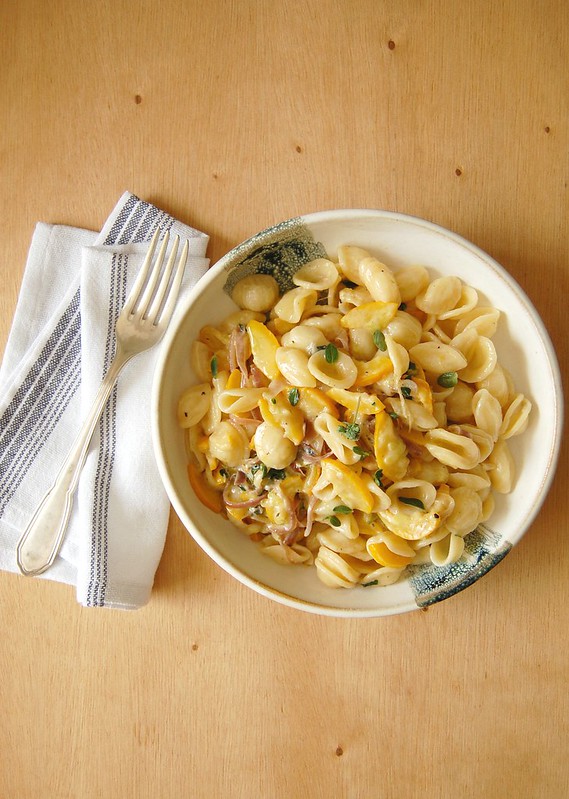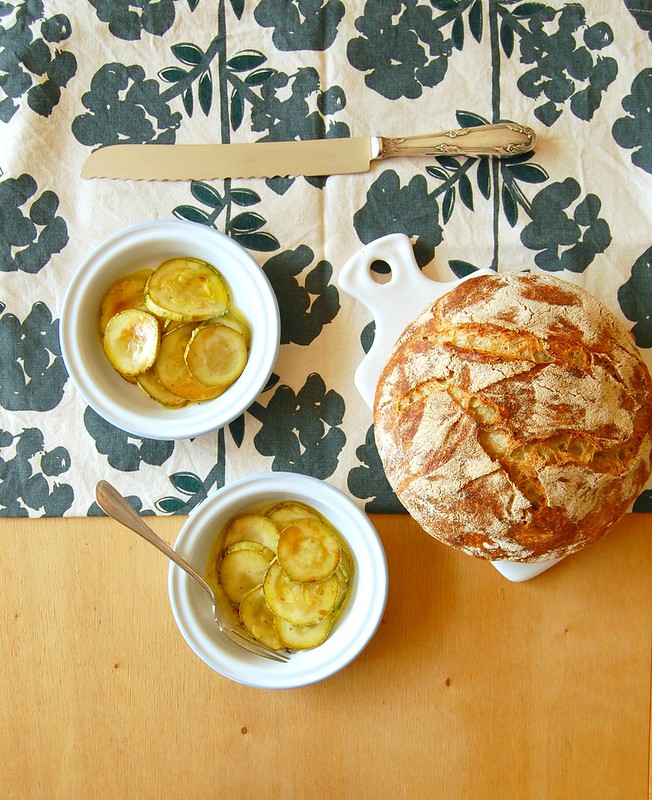
This food stylist wannabe got crazy when she saw yellow courgettes in farmer’s market for the first time – until then I had only seen it on books, magazines and food TV shows. Of course I brought some home and immediately thought of something tasty and visually beautiful to make with it.
For this recipe I used red onion so I could have a nice color contrast, however after that day I made this pasta several other times using regular onions and courgettes and it was flavorsome anyway.
Orecchiette with courgette and goat’s cheese sauce
own recipe
2 tablespoons unsalted butter
1 teaspoon olive oil
½ large red onion, thinly sliced in half moons
1 large garlic clove, minced
1 courgette (about 350g/12oz), sliced in half lengthwise and then sliced into thin half moons
finely grated zest of 1 lime
handful of fresh marjoram leaves
2 tablespoons dry white wine
¼ cup (60ml) heavy cream
35g goat’s cheese, coarsely grated or crumbled
200g orecchiette pasta
Cook the pasta in plenty of boiling salted water until al dente (follow the instructions in the package). In the meantime, make the sauce: in a large frying pan, heat the butter and olive oil until butter is melted. Add the onion and cook, stirring occasionally, until softened. Stir in the garlic and cook for 1 minute only – do not let it burn or it will be bitter. Add the courgette and cook, stirring occasionally, for 5-7 minutes or until softened. Season with salt and pepper and stir in the lime zest and the marjoram. Add the wine and cook until it evaporates. Stir in the cream and the cheese and cook just until the cheese melts.
Drain the pasta, reserving some of the cooking water, and stir into the sauce – if sauce is too thick, stir in a bit of the cooking water to loosen it up. Serve immediately.
Serves 2
Other ideas: this recipe tastes great if gorgonzola and fresh oregano are used instead of goat’s cheese and marjoram.
Wednesday, March 21, 2018
Orecchiette with courgette and goat’s cheese sauce
Thursday, September 28, 2017
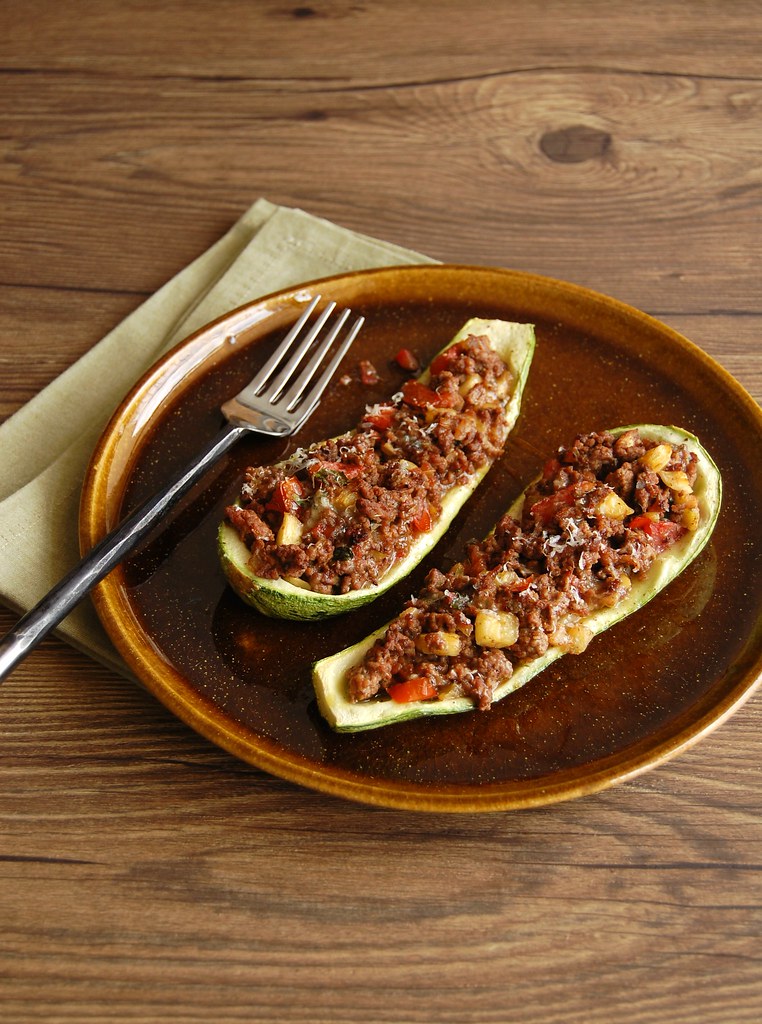
Stuffed zucchini, not like my grandma's
One of the dishes that remind me of my grandmother the most is stuffed zucchini: she would make these quite often when she lived with us because my father liked it a lot.
I did not like meat growing up and back then I did not understand why my grandma would make this dish so often, but now that I am all grown up it makes a lot of sense to me: it is delicious – when prepared properly – and it makes things quite easier for the cook, since you only need a green salad on the side to call it a complete meal.
This is my version of stuffed zucchini: out with the mushy rice mixed with pale beef, in with with wine, tomatoes, fresh marjoram and gorgonzola – absolutely delicious (sorry, grandma). :)
Stuffed zucchini
own recipe
4 zucchini, about 250g/8oz each
3 tablespoons extra virgin olive oil
1 onion, finely diced
3 garlic cloves, minced
400g (14oz) beef mince
salt and freshly ground black pepper
¼ cup (60ml) dry white wine
2 tablespoons tomato paste
2 ripe tomatoes, deseeded and chopped
handful of fresh marjoram leaves
150g (5oz) gorgonzola, coarsely grated or crumbled
finely ground parmesan, for serving
Preheat the oven to 200°C/400°F. Line a large baking sheet with foil and brush it with some of the olive oil.
Cut the zucchini in half lengthwise – you should then get 8 halves that look like little boats. With a small spoon, scrape some of the flesh – do not carve the zucchini halves too much or they will be too flimsy. Chop the flesh and set aside. Place the zucchini on the prepared sheet and brush the inside of each half with some of the olive oil.
Bake for 20 minutes – in the meantime, make the filling: heat the remaining olive oil in a large nonstick frying pan over high heat. Add the onion and cook, stirring occasionally, until translucent. Stir in the garlic and cook for 1 minute or until fragrant – do not let the garlic burn or it will turn bitter. Stir in the mince and cook, stirring occasionally, until golden. Season with salt and pepper – go easy on the salt since the cheeses can be salty. Stir in the wine and cook again for 2-3 minutes or until wine is reduced – using a wooden spoon, scrape the brown bits in the bottom of the saucepan for extra flavor. Stir in the tomato paste, chopped tomatoes, ¾ cup of the reserved zucchini flesh (you can freeze the remaining flesh and use it to make vegetable stock) and the marjoram. Cook for about 5 minutes or until tomatoes are soft. Remove from the heat, stir in the gorgonzola and divide the meat filling among the zucchini halves. Bake for 15 minutes. Sprinkle with the parmesan and serve immediately.
Serves 4
Tuesday, September 5, 2017
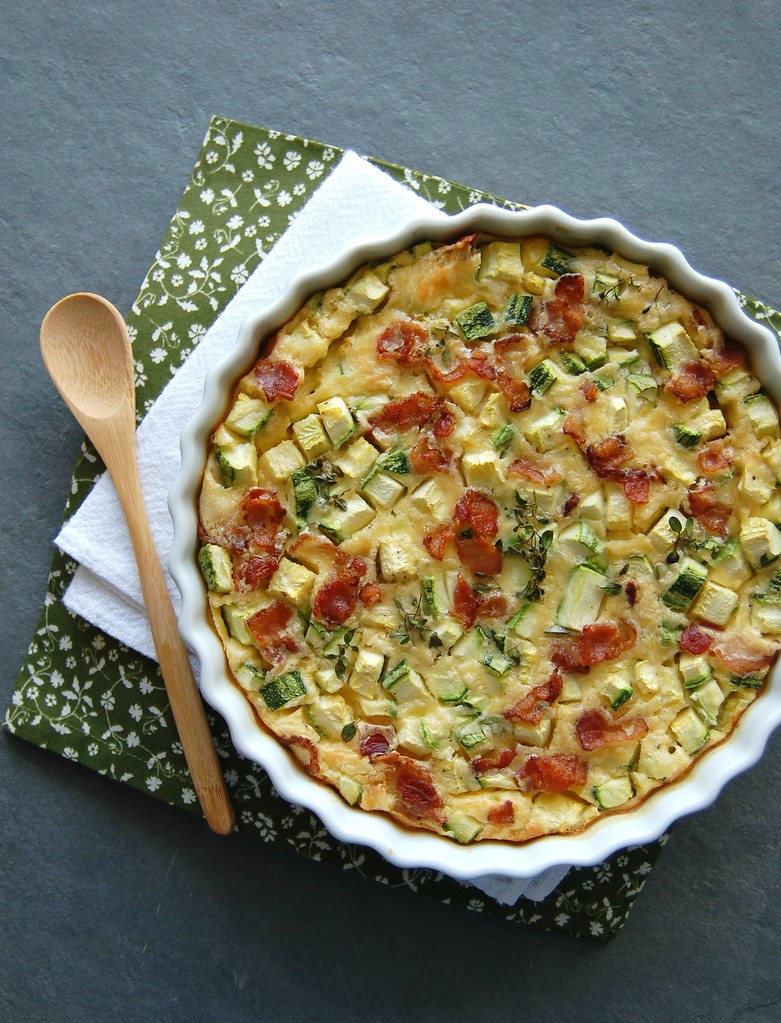
Zucchini, bacon and cheese clafoutis
Those of you around here for a while know that the other habitant of my house used to be a very picky eater until he spent (precious) days in China - one of the things he did not eat back then was heavy cream (!).
That has luckily changed and many times in the warmer months, when we wanted something light but still delicious I made savory clafoutis for lunch and served with a big salad. Joao’s favorite mix of flavors is the one I bring you today: the salty bits of bacon pair wonderfully well with the cheese and the zucchini. My favorite clafoutis is the one made exactly like this, however swapping the zucchini for a handlful of button mushrooms that get browned in a drizzle of the leftover bacon fat before being added to the batter. If you ever try any of the versions I will love to hear your comments about it.
Zucchini, bacon and cheese clafoutis
own creation
2 slices of bacon, chopped
2 large eggs, room temperature
1/3 cup (80ml) heavy cream
1/3 cup (80ml) whole milk, room temperature
½ cup (70g) all purpose flour
1/3 cup gruyere cheese, coarsely grated
1 medium zucchini (about 200g/7oz), in small dice
2 sprigs of fresh thyme, leaves only
salt and freshly ground black pepper
Preheat the oven to 190°C/375°F. Set aside a 1-liter capacity heatproof baking dish – the one on the photo is 20cm (8in) wide and 3.5cm (1 1/3in) deep.
Heat a small nonstick frying pan over high heat and cook the bacon, stirring occasionally so the pieces brown evenly. As soon as they are crispy, remove them from the saucepan using a slotted spoon and transfer to a plate lined with paper towels. Use some of the rendered fat to grease the insides of the baking dish.
In a medium bowl, whisk the eggs, cream and milk until smooth. Add the flour and whisk until smooth again. Stir in the cheese, zucchini and thyme leaves, then season with salt and pepper. Pour into the prepared baking dish and sprinkle with the bacon bits.
Bake for 35-40 minutes or until puffed and golden. Serve immediately.
Serves 2-3 (depending on what is served with it)
Thursday, August 31, 2017
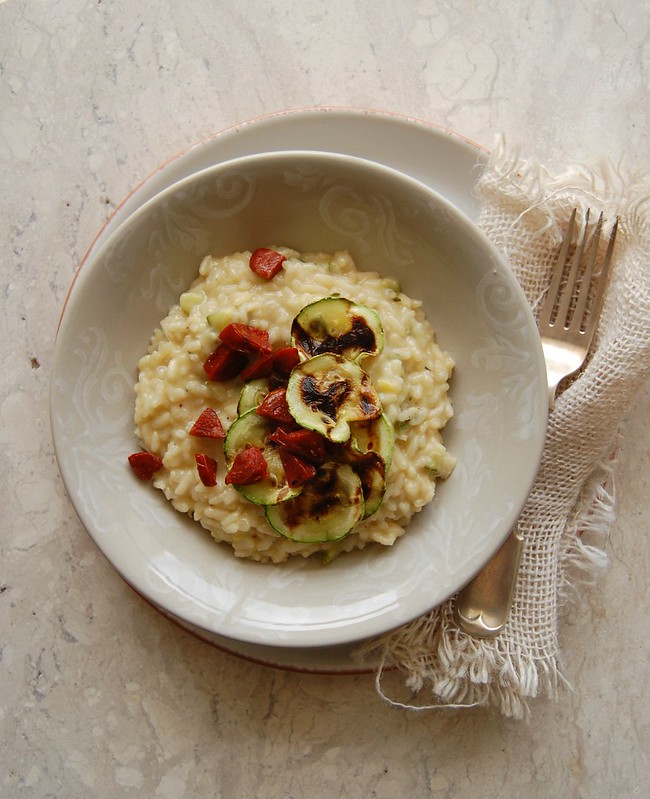
Zucchini and chorizo risotto - a truly delicious recipe
You might think that I obsess over sweet ingredients only – and taking a look at the blog, who can blame you? :) – but some savory ingredients make me so happy I want to include them in just about anything. Chorizo is one of them: ever since I tried it for the first time I have been using it in several dishes, always with delicious results.
I make risottos often and it was only a matter of time before I added chorizo to them, however, I was trying to play with different textures and wanted to add layers to my risotto. Adding the crunchy bits of chorizo on top was one of the ideas, which turned out to be a win/win situation, since I used the fat rendered from the chorizo to coat the rice and removing it from the saucepan before adding the liquid I avoided it from going soft. I also wanted two different textures for the zucchini, so half of it was thinly sliced and grilled – which added a nice smoky flavor – and the other half was incorporated in the risotto. I do not mean to brag, but this is one of the most delicious dishes I have ever cooked.
Zucchini and chorizo risotto
own recipe
Grilled zucchini:
1 large zucchini (about 200g/7oz)
olive oil
salt
For the risotto:
50g (2oz) chorizo sausage, in small cubes
1 ½ tablespoons unsalted butter – divided use
½ small onion, finely diced
1 sprig of fresh thyme
¾ cup (165g) Arborio or Carnaroli rice
¼ cup (60ml) dry white wine
3 cups (720ml) hot vegetable stock
salt and freshly ground black pepper
50g (2oz) Canastra cheese, coarsely grated*
2 tablespoons finely grated parmesan cheese
Slice half the zucchini into thin slices and dice the remaining in to small cubes. Set the cubes aside (they will go in the risotto). Drizzle the zucchini slices with just a bit of oil and season with salt. Heat a large nonstick skillet or frying pan over medium-high heat and grill the zucchini slices for 1-2 minutes each side or just until golden. Set aside on a plate.
Heat the chorizo cubes in a medium saucepan over medium-high heat, stirring occasionally so the pieces brown evenly. As soon as they are crispy, remove them from the saucepan using a slotted spoon and transfer to a plate lined with paper towels. Add ½ tablespoon of the butter to the saucepan , followed by the onions and sprinkle with a little salt. Cook, stirring occasionally, until onion is translucent. Add the zucchini cubes and the thyme sprig and cook for 2 minutes. Add the rice and cook for 2-3 minutes, stirring, until rice is nicely coated in the fat. Stir in the wine and cook until it evaporates. Stir in the hot stock, 1 ladleful at a time, and continue to cook, stirring until all the stock is absorbed, before adding more stock.
Repeat this until all the stock has been used, the rice is al dente and the risotto is thick and glossy – about 20 minutes (you might not use all the stock). Season with salt and pepper, but go easy on the salt since chorizo and parmesan might be salty.
When the rice is al dente, remove the thyme sprig and stir in the cheeses and the remaining 1 tablespoon of butter. Check the seasoning, put the lid on and wait 2 minutes. Transfer the risotto to the serving plates, top each with the grilled zucchini slices and the crispy chorizo and serve immediately.
* for this recipe I used a kind of cheese typical from Brazil called Canastra cheese. Feel free to replace it with Grana Padano, more parmesan or any other cheese you like – just keep in mind that chorizo can be salty, so very salty cheeses might not go well in this recipe
Serves 2
Wednesday, July 15, 2015
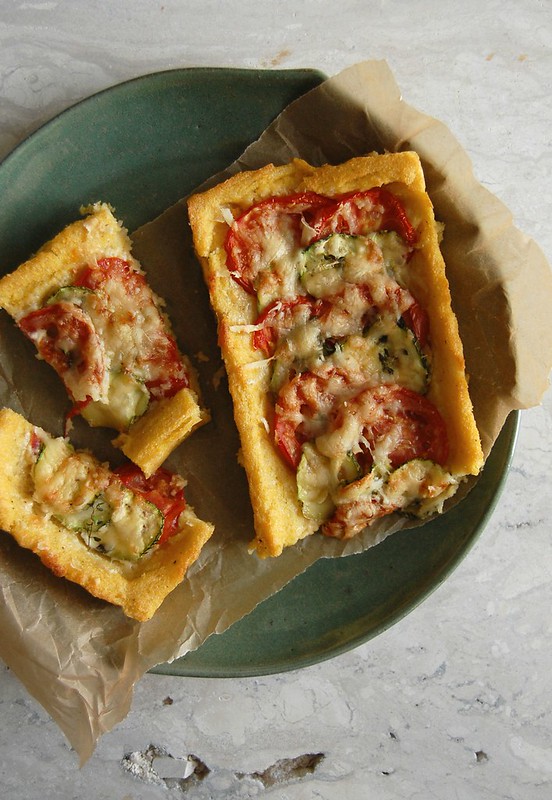
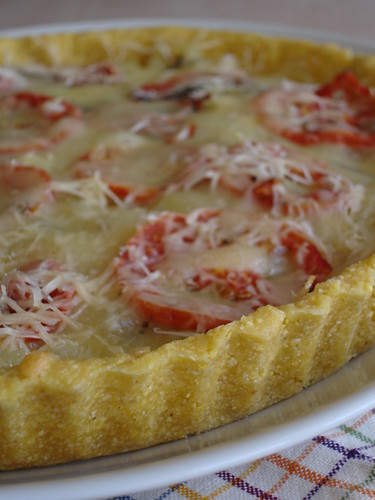
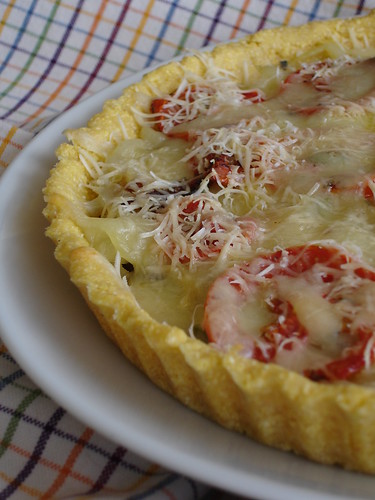
Stripy courgette, tomato and polenta tart
New cookbooks can be a lovely surprise, a big disappointment or something in between – even with the “Search Inside” feature at Amazon I’ve had my share of regret buying some of them.
My latest purchase, however, was an epic win: I got Annie Rigg’s beautiful cookbook on fruit and Georgina Fuggle’s Take One Veg
, and they’re both insanely beautiful – I feel like making each and every recipe on both of them, for there is nothing tricky despite the deliciousness of everything.
I made one of Rigg’s recipes and it was wonderful, but more on that later on this week – Georgina’s idea of using polenta as a tart base was such a hit at home that I had to share it with you: even my husband ate it gladly, and that is certainly something not to be taken lightly. The tart was a cinch to make and served with a green salad it was a delicious meal, one that I plan on repeating with different vegetables.
Stripy courgette, tomato and polenta tart
slightly adapted from the absolutely delicious Take One Veg: Over 100 Tempting Veggie Recipes for Simple Suppers, Packed Lunches and Weekend Cooking
Crust:
500ml hot vegetable stock
140g polenta - since the recipe doesn't state what kind of polenta it is, I used this one (I was out of instant polenta)
1 tablespoon unsalted butter
50g Parmesan cheese, finely grated
1 egg, lightly beaten
salt and freshly ground black pepper
Filling:
2 tablespoons crème fraîche – I used homemade sour cream
1 small courgette, thinly sliced
2 tomatoes, sliced into thin slices
1 tablespoon fresh thyme leaves
50g Parmesan cheese, finely grated
Start by making the polenta crust: bring the vegetable stock to a simmer in a medium saucepan and pour the polenta into the water. Keep your pan over a low heat and, using a wooden spoon, stir the mixture constantly, thrashing out any lumps that try to form. Continue for around 6 minutes until the polenta is very thick.
Remove from the heat and add the butter and Parmesan and stir until they have disappeared. Cool for 5 minutes, then stir through the beaten egg and season with salt and pepper. Let cool slightly – in the meatime, preheat the oven to 200°C/400°F.
Lightly grease a square 21cm tart pan with olive oil (I used butter). Put the polenta in the centre and, using a spatula or oiled fingers, gently tease it up the sides of the pan to create the sides of the crust.
Smother a thin layer of crème fraîche over the base of your tart and top with half the Parmesan. On top of the cheese, alternate slices of courgette and tomato. Finish with the thyme leaves and the remaining Parmesan.
Bake on the middle shelf of the oven for 45 minutes, then reduce the temperature to 180°C/350°F and bake for a further 15 minutes. Remove and allow the tart to cool for 5-10 minutes to allow it to ‘come to’. Serve in slices.
Serves 4 – I made the recipe above using a 30x10cm (12x4in) tart pan – there was a bit of polenta left that I formed into pancake, grilled on both sides with a tiny bit of olive oil until golden and topped with cheese and dried oregano for a snack (there is a photo here).
The recipes says it serves 4, but the tart I made was polished off by 2 served with a green salad! :)
Thursday, April 16, 2015
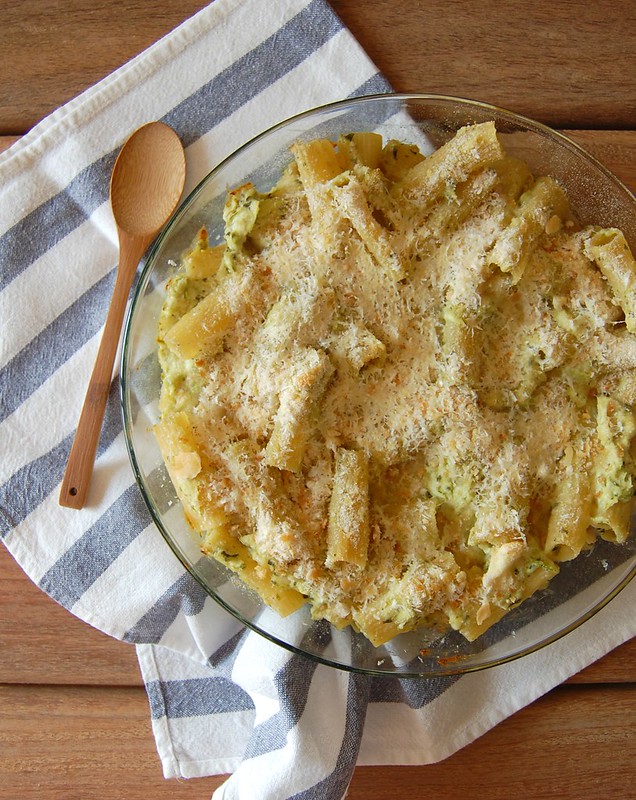
Pesto & courgette pasta bake for a courgette-eating husband
Those of you who cook for picky eaters know the feeling, I’m sure: when the person who always hated something starts eating that very thing it feels like a small victory.
When my husband decided to try mushrooms for the first time in his life and liked them, I started adding mushrooms to our meals and it was such a good thing (the vegetarian Bolognese is, indeed, delicious and I love cooking that recipe). Now that he’s come to the conclusion that he doesn’t really hate courgettes I have been adding them to our meals quite regularly, and this pasta bake was a really tasty way of having the vegetable.
I tweaked the recipe a bit – the original version called for crème fraîche, for instance, which I replaced for homemade ricotta – and got a lighter dish as a reward, not to mention the recipe is easy and tasted great: the crunchy bread and cheese topping makes the pasta extra special.
Pesto & courgette pasta bake
adapted from the always delicious Good Food magazine
150g rigatoni
1/3 cup basil pesto
200g ricotta – I used homemade
200g courgettes, coarsely grated
½ cup finely grated parmesan, divided use
salt and freshly ground black pepper
30g fresh breadcrumbs
extra virgin olive oil, for drizzling
Preheat oven to 180°C/350°F. Cook the pasta for 1-2 minutes less than the pack instructions say, so that it has a little more bite. Reserve 1 cup of cooking water.
Meanwhile, mix the pesto, ricotta, courgettes and half the parmesan together. Add the pasta and stir well, adding a little of the reserved water to create a good sauce consistency. Taste and season with salt and pepper.
Tip the pasta and sauce into a shallow baking dish and scatter over the breadcrumbs, then the remaining parmesan. Drizzle with a little olive oil and bake for about 15 minutes or until the topping is crisp.
Serves 2
Sunday, March 22, 2015
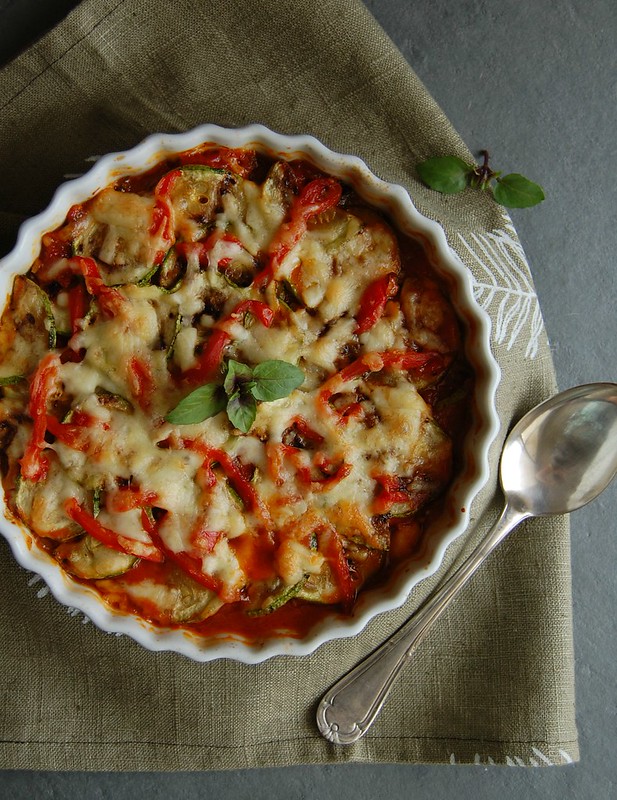
Courgette, tomato and roasted red pepper gratin and baby talk
My sister-in-law and I talk about my baby nephew a lot, and we always talk about the food he’ll eat when he grows up – my brother is the pickiest eater I know and we know that he’ll have to change in order to become a good example for the boy.
I tell her to calm down because my husband used to be just like that and now he tries lots of different types of food (I guess we’ll have to organize a trip to China for my brother as well). :D
For instance, my husband always tells me how much he hated gratins as a kid, especially the potato gratin his mother made constantly back in the day. He also hated courgettes. Just so you know, he ate the gratin in the picture like crazy and told me that I can make that dish whenever I want because “it is so delicious”.
People change, thank heavens. There’s still hope for my brother. :D
Courgette, tomato and roasted red pepper gratin
slightly adapted from the always delicious Olive magazine
1 small red pepper
2 tablespoons olive oil, divided use
½ large onion, finely diced
2 large garlic cloves, minced
1 x 400g (14oz) can peeled tomatoes
1 teaspoon sugar
salt and freshly ground black pepper
handful of fresh basil leaves
350g large courgettes, halved in the widest part, cut into 5mm slices
75g coarsely grated cheddar salt and freshly ground black pepper
Preheat the oven to 220°C/420°F. Put the red pepper on a baking tray and roast in the oven for about 30 minutes, turning it once or twice, until the skins are blackened in places and the flesh is soft. Transfer to a heatproof bowl, seal with plastic wrap and leave to cool. Break the pepper open, discard the stalk and seeds, peel off the skin and slice the flesh into thin strips.
While that goes on, make the tomato sauce: in a medium saucepan, heat 1 tablespoon of the olive oil over medium-high heat. Add the onions and cook until translucent. Add the garlic, cook for 1-2 minutes, then add the tomatoes and the sugar. Fill 1/3 of the can with water, swirl it around and add to the saucepan. Season with salt and pepper, break the tomatoes with a wooden spoon then cook over medium heat, stirring occasionally, for about 20 minutes or until slightly thickened. Add the basil, stir to combine, cover and remove from the heat.
Heat a large, ridged griddle until smoking hot, then lower the heat slightly. Toss the courgette slices in the other tablespoon of oil, season with salt and pepper, then griddle in batches for 2 minutes on each side until marked with dark lines. Set aside on kitchen paper to drain.
Spread half the sauce over a medium, shallow baking dish. Scatter half the griddled courgettes over the tomato sauce, followed by half the red pepper strips and half the grated cheese. Spoon over the remaining tomato then repeat the layers once more, ending with the grated cheese. Bake for 25-30 minutes until lightly golden and bubbling.
Serves 2 generously
Friday, January 9, 2015
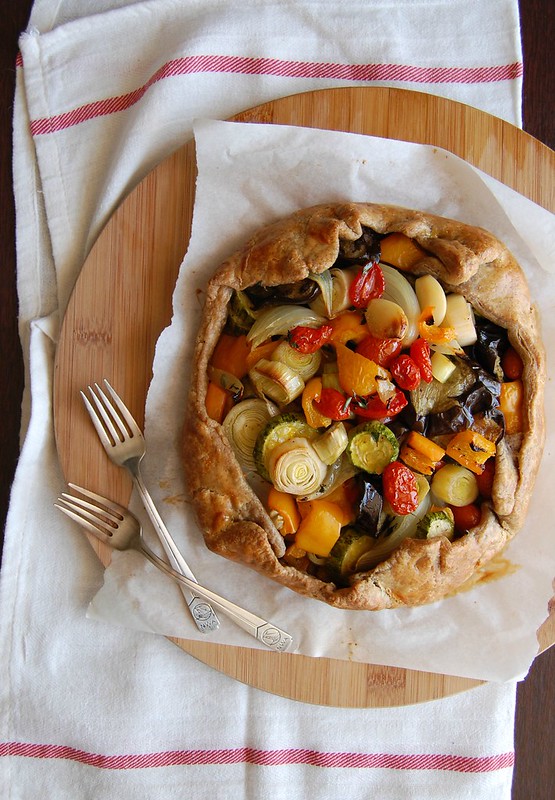
Rye ratatouille tart
My craving for vegetables is still full on and I’m always looking for interesting ways of cooking them, especially because my husband has become a veggie convert – I love it that he’s realized that he doesn’t need all the meat he though he needed and that eating more vegetables is good for him (let’s forget that it took him forty-six years to finally get to that conclusion – better late than never, right?) ;)
I love tarts, both sweet and savory, so when I saw this ratatouille tart on a Brazilian TV show I fell in love with it: so colorful, so beautiful! I decided to make it but switched the pastry (pâte brisée) for the wonderful rye pastry I love so much – it worked like a charm! The flavorsome pastry paired beautifully with the roasted vegetables.
This tart is delicious and looks really beautiful – I’m all for food that tastes and looks good.
Rye ratatouille tart
adapted from this lovely book and from Rita Lobo
Pastry:
½ recipe rye pastry
Filling:
1 small eggplant
1 small zucchini
¾ cup cherry tomatoes
1 leek, white part only
1 small yellow pepper
1 onion
4 garlic cloves
salt and freshly ground black pepper
3 tablespoons extra-virgin olive oil
2 sprigs rosemary
4 sprigs fresh thyme
Slice the eggplant in 1cm slices (if too wide, cut the slices in half). Transfer to a bowl of lightly salted water. Set aside for 30 minutes.
Preheat the oven to 200°C/400°F.
Slice the zucchini in 1cm slices (if too wide, cut the sliced in half), cut the cherry tomatoes in half lengthwise, slice the leek in 1cm slices as well and cut the bell pepper in squares. Peel the onion and cut into eights, then slice the garlic cloves in half lengthwise.
Drain the eggplant, pat dry with paper towels and place the pieces on a baking sheet. Drizzle with 2 tablespoons olive oil and roast for 15 minutes. Place the other vegetables on the baking sheet with the eggplant, drizzle with 1 tablespoon olive oil and season with salt and pepper. Toss to coat, then roast for 30 minutes. Remove from the oven. Lower the oven temperature to 180°C/350°F.
Place the dough onto large piece of baking paper and roll into a rough 25cm (10in) circle. Transfer to a cool baking sheet. Arrange the roasted vegetables on the center of the pastry and top with the fresh herbs. Fold one edge in towards the center of the filling and continue folding all the way round, bringing the edge of the pastry towards and over the filling.
Brush the tart with the egg wash (only the pastry). Bake for about 30 minutes or until golden brown. The tart is delicious both warm and at room temperature.
Serves 4
Sunday, January 4, 2015
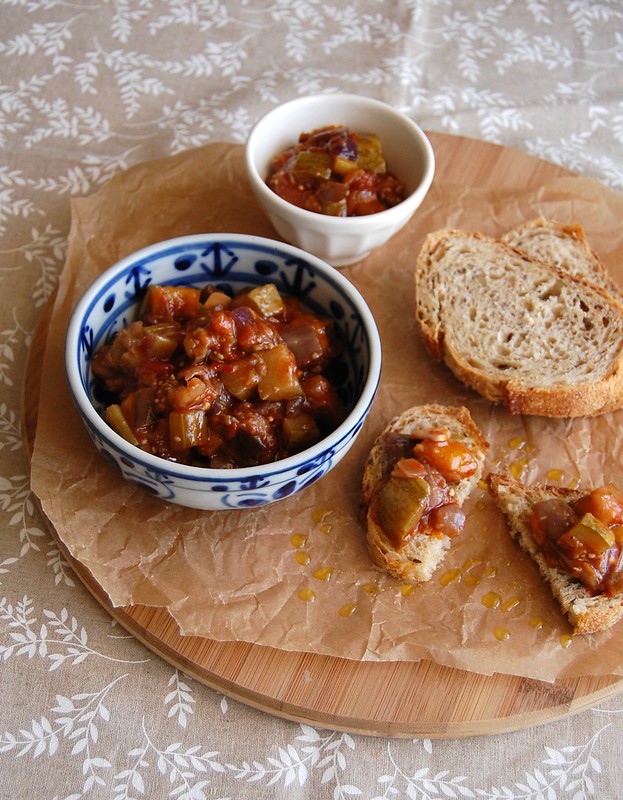
Caponata - easy and delicious
Caponata is something I ate a lot growing up, but never knew the real name – my grandmother used to make it all the time, especially when there were a lot of people to feed, and she served it with bread or on small toasts, canapé style. I loved it and would ask her to make it again and again – I used to call it “my grandma’s eggplant dish”, having no idea it was such a staple of Italian cuisine.
It took me forever to make caponata myself, maybe because it has always been something so attached to my grandma’s cooking, but my husband asked me to make it and I decided to give it a go, especially after going through some of my books and finding a recipe by Andrew Carmellini on one of my favorite cookbooks – it is his the most delicious gnocchi I’ve ever made, and I ate at both Lafayette and Locanda Verde when I was in NYC, so I trust the guy. ;)
Andrew’s caponata is very easy to put together and it tastes great, not to mention it benefits from a day of two in the fridge – I’m all for making things in advance, so this recipe has become part of my repertoire and I hope it becomes part of yours, too.
Caponata
slightly adapted from the delicious Urban Italian: Simple Recipes and True Stories from a Life in Food
1/3 cup (80ml) extra-virgin olive oil
1 red onion, diced large
1 yellow pepper, diced large
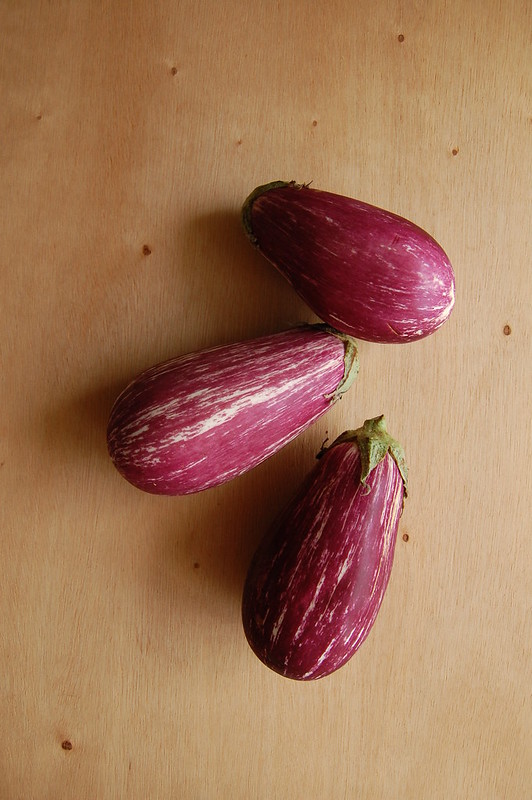
1 Italian eggplant, diced large
3 stalks of celery, diced large
1 zucchini, diced large
½ teaspoon table salt
¼ teaspoon freshly ground black pepper
½ teaspoon red pepper flakes
2 cloves of garlic, sliced thin
1 400g (14oz) can chopped peeled tomatoes
1 tablespoon balsamic vinegar
2 tablespoons thyme leaves
3 tablespoons red wine vinegar – I used sherry vinegar
Heat olive oil in a large saucepot over high heat. Add the onion, pepper and eggplant. When the vegetables have softened a bit (about 5 minutes), add the celery and zucchini. Season with half the salt and black pepper. Mix the ingredients together and continue to cook.
After ten 10 minutes, add the red pepper flakes and garlic. Cover and reduce the heat to medium, and let the steam roast the vegetables for 5 minutes. Add the tomatoes, reduce the heat to low and simmer for 10 minutes, until vegetables are soft but not falling apart and the tomatoes are well incorporated. Mix in the balsamic vinegar and cook for 2 minutes.
Remove the saucepot from the heat, add the thyme and season with remaining salt and pepper (add more salt to taste if necessary). Mix in vinegar.
The caponata can be kept in an airtight container in the fridge for 4-5 days (I thought it tasted better the day after it was made).
Serves 8-10
Thursday, July 31, 2014
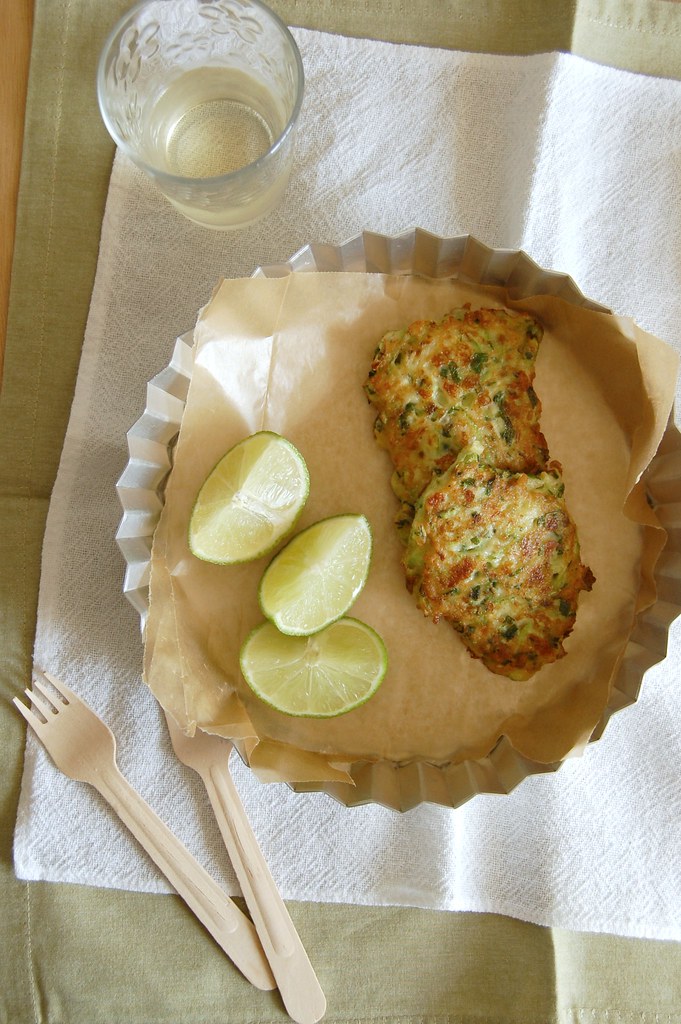
Courgette and feta fritters, a crazy trailer and a versatile young actor
Unfortunately I don’t have time to read all the websites and blogs I like (and I’m sure you don’t either so thank you for stopping by, I really appreciate it), but not a day goes by that I don’t visit IMDb for news on the world of cinema.
Yesterday, in one of those visits, I watched the trailer for Horns and it immediately became one of the most interesting/craziest trailers I have even seen. Daniel Radcliffe’s choices in movies and theater have been very diverse and I find it honorable that he’s interested in doing such different things, stretching himself as an actor: he does controversial, he does dark comedy, and romantic comedy as well – who can forget him staring in Equus years ago? So young, yet so versatile – I really admire that.
Daniel is versatile, all right, and so are fritters: they can be pretty much made with any vegetable in your fridge and it’s a nice vessel for them if there’s any picky eater around. These courgette fritters turned out delicious and tender – they were fast to prepare and vanished even faster. :D
Courgette and feta fritters
slightly adapted from two great sources: A Girl Called Jack: 100 Delicious Budget Recipes and Nigella Fresh
1 large courgette
1 spring onion, finely chopped
handful parsley leaves, chopped
1 egg, lightly beaten with a fork
50g feta cheese, grated
2 tablespoons all purpose flour
salt and freshly ground black pepper
canola oil, for frying
Coarsely grate the courgette and spread it onto a clean kitchen towel. Set aside for 20 minutes to get rid of any excess moisture.
Transfer the courgette to a large mixing bowl, add the spring onion, parsley, egg, feta and flour, season with salt and pepper and stir to combine. If batter is too thin, add a bit more flour.
Heat a drizzle of oil in a large nonstick frying pan. Dollop two tablespoons of batter per fritter, flatten with the back of a spoon and shape the edges quickly to form a rough circle. Don’t overfill the frying pan. Cook for about 2 minutes, then flip and cook until golden. Transfer to a plate lined with paper towels. Repeat the process with remaining batter.
Serve at once with lime wedges.
Makes 6
Monday, November 4, 2013
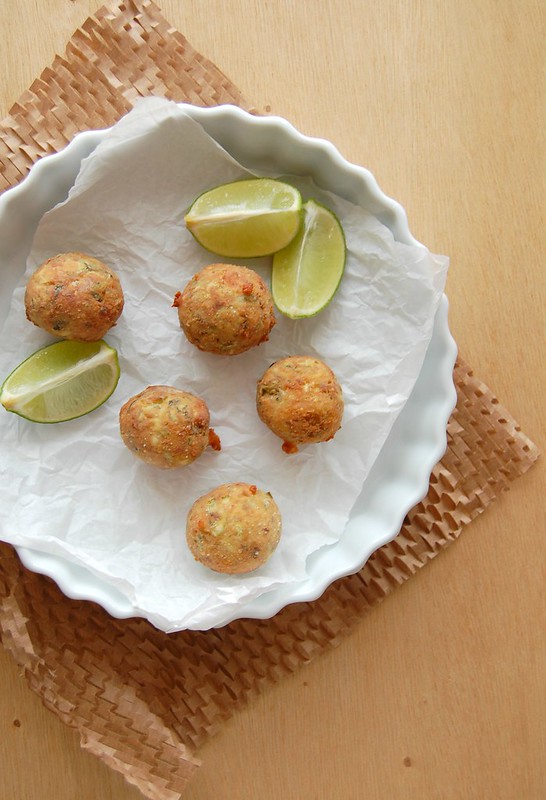
Zucchini keftedes and to each their own
Every time I watch “The Great British Bake Off” (thanks to some really nice people who post the episodes on YouTube) I get cranky about the contestants’ lack of hygiene – all that touching of hair, then touching of the floor, then touching the food drives me crazy! I feel sorry for the judges who have to eat the baked goods. There was an episode in which a cake or something was sliced and a hair could be clearly seen on the close up – I think it was one of Cathryn’s sweets (season 3), if I’m not mistaken. Eeew. :S
To make things even more unappetizing for me the last episode I watched had the contestants baking with suet, which is something I wouldn’t eat no matter the amount of sugar and fruit added (that said, I have always wanted to make a roly-poly, replacing the suet for butter or vegetable shortening or using this suet-free version from Gourmet Traveller).
While eating suet is not part of my plans, my husband wouldn’t try anything with zucchini (to each their own, right?), and telling him a hundred times how delicious that vegetable is wasn’t really helping. Things changed when he tried these keftedes – the minute I started frying the balls the kitchen was filled with a wonderful smell, sort of like when someone is making grilled cheese and some of the cheese slips off the bread and touches the screaming hot frying pan; that got him immediately interested – he bit into one fritter, looked at me and said: “I’ll grab the Tabasco and a very cold beer”. :D
Zucchini keftedes
slightly adapted from the beautiful Full of Flavor: How to Create Like a Chef
450g (1 pound) zucchini, trimmed and coarsely grated
2 tablespoons grated onion
100g feta cheese, crumbled
¾ cup finely grated parmesan
3 tablespoons chopped parsley
2 tablespoons chopped fresh oregano
2 eggs, lightly beaten with a fork
6-8 tablespoons fresh breadcrumbs
salt and freshly ground black pepper
all purpose flour, seasoned with salt, for dusting
canola oil, for frying
Blanch the zucchini in boiling water for 2 minutes. Drain and squeeze dry in a cloth (I let the zucchini cool a little before doing that because it was impossible to handle such a hot kitchen towel).
Place the olive oil in a small saucepan, add the onions with a pinch of salt and cook until soft and translucent. Transfer to a large bowl and let cool. Add the zucchini, feta, parmesan, parsley, oregano, eggs and half the breadcrumbs. Season with salt and pepper, then mix to combine. If the mixture is too wet, gradually add more breadcrumbs. Cover and refrigerate for 1 hour.
Taste the seasoning before frying the keftedes. Shape the mixture into 2.5cm (1in) balls, then roll into the flour*.
Heat the oil in a medium saucepan and fry the balls in batches until golden. Drain in paper towels and serve immediately.
* the hubby suggested that rolling the keftedes in breadcrumbs instead of all purpose would make them even nicer on the outside and although I haven’t tried doing that I agree with him.
Makes about 20
Friday, November 7, 2008
Polenta-crusted roasted ratatouille tart
Thank you all for your comments and concern – your positive thoughts and kind words were very important for my getting better, for sure!
I have been thinking a lot about sweets lately – due to Christmas coming and the gifts I want to make for my friends and colleagues. I have so many recipes bookmarked I don’t even know where to start, really...
I found this recipe going through cookie and candy recipes for the holidays. I have no idea why it was filed in my sweet folder, but I considered it a sign. I’d rather have a sign like this than the one Francesca had in Tuscany. Eeew! :)
Polenta-crusted roasted ratatouille tart
slightly adapted from here and here
Crust:
1 cup (155g) instant polenta
½ cup (70g) all purpose flour
¼ teaspoon + a pinch of salt
3 tablespoons cold, unsalted butter, in cubes
3 tablespoons olive oil
4-5 tablespoons water
Filling:
3 tablespoons olive oil
½ large onion, thinly sliced
1 small eggplant, sliced
1 small zucchini, sliced
2 tomatoes, sliced
salt and freshly ground black pepper
dried oregano
fresh oregano leaves, to taste
1 ½ cups shredded mozzarella cheese – I used the yellow mozzarella we have here, made with cow’s milk and that looks similar to Monterrey Jack cheese
3 tablespoons freshly grated Parmesan
Start with the filling: preheat the oven to 200ºC/400ºC. Heat 1 tablespoon of olive oil in a pan over medium heat; sauté onion until soft, about 5 to 6 minutes. Spray 2 baking trays with cooking spray. Arrange the eggplant, zucchini and tomato slices on the trays in a single layer and brush with the remaining olive oil. Season with salt and pepper, sprinkle the tomatoes with dried oregano and roast the vegetables until soft but not browned, about 15 minutes. Remove the vegetables from oven and cool.
Now, the crust: lower the oven temperature to 180ºC/350ºF.
Combine polenta, flour and salt in the bowl of a food processor – I used my Kitchen Aid with the paddle attachment. Pulse to incorporate. Add butter and oil and pulse about 20 times, until mixture resembles small pebbles. Add water and pulse until mixture forms a loose dough. Remove dough from processor and press into bottom and sides of a lightly oiled 24cm tart pan with a removable bottom (my pan doesn’t have very high sides).
Press aluminum foil or baking paper over the dough weigh down with uncooked rice, beans or pie weights. Place tart pan on a baking sheet and bake for 10-12 minutes. Remove from oven and remove rice and foil. Return to oven, rise the temperature to 200ºC/400ºF and bake for an additional 5-8 minutes, or until no longer shiny and wet. Remove from oven and let cool.
Lower the oven temperature to 180ºC/350ºF.
Lay the eggplant slices on the bottom of tart; cover with 1/3 of the mozzarella cheese and some of oregano leaves. Add the zucchini and onion, top with another 1/3 of the mozzarella and oregano, then the tomatoes. Top with rest of the mozzarella cheese, oregano leaves and the parmesan. Bake for 25 to 30 minutes, or until cheese is melted and vegetables have further wilted.
Remove from oven and let cool for 5 minutes before unmolding it. Serve warm.
Serves 6
Wednesday, July 30, 2008
Linguine with zucchini, capers, lemon, pine nuts and herbs and a tribute to Sher
As many of you in the food blog world I was shocked with the news that our dear Sher had suddenly passed away.
A lovely woman who would brighten up everyone’s day with encouraging comments and kind words, Sher was a passionate foodie and shared many delicious recipes on her delightful blog. She was the queen of meatballs!
I only knew her virtually, but she’ll be missed and my heart goes out to her family and friends.
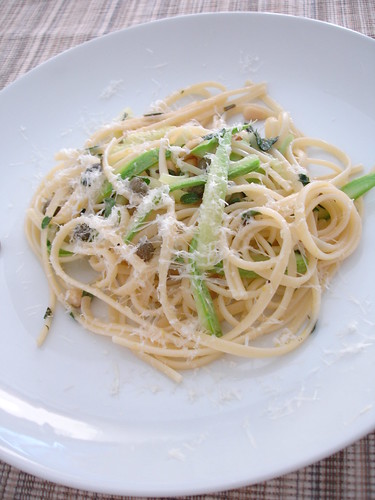
After reading Sara’s post, I felt like taking part in the beautiful tribute to Sher. This is the recipe I chose and it was delicious, just like everything else on her blog.
Linguine with zucchini, capers, lemon, pine nuts and herbs
1 lb. (450g) linguine
8 ounces (226g) small, firm green or golden zucchini
½ cup mixed fresh herbs: parsley, marjoram, basil, chervil, thyme, and others of your choice
1 lemon
6 tablespoons virgin olive oil
5 tablespoons pine nuts
4 shallots, roughly chopped
4 teaspoons capers, rinsed in water
2 sun dried tomatoes, cut into narrow strips - I omitted this
salt and freshly ground black pepper
grated parmesan, to serve
Slice the zucchini into pieces about the same thickness as the pasta you are using, then cut them into narrow matchsticks. Bring a large pot of water to boil.
Using as many of the herbs of your choice that you want, pull the leaves off the stems and chop the herbs roughly. Grate the zest of the lemon and set aside (you’ll use the juice as well).
Heat 2 tablespoons of the oil in a small pan and add the pine nuts. Cook them until they begin to color, then add the shallots and cook over medium heat until the shallots are limp and the pine nuts have colored even more. Do not burn the pine nuts. When done, transfer this to a large bowl, along with the lemon grated zest, capers, tomatoes and herbs.
Add salt to the boiling water, drop in the zucchini and cook for 1 minute; Scoop the zucchini out, shake the water off and put it into the bowl with the pine nuts mixture. Then boil the pasta until al dente, drain and place in the bowl. Season with salt and pepper, the remaining olive oil and lemon juice to taste. Toss until the noodles are coated with the oil and herb mixture. Serve with the grated cheese, passed separately.
Serves 2-4
Thursday, January 10, 2008
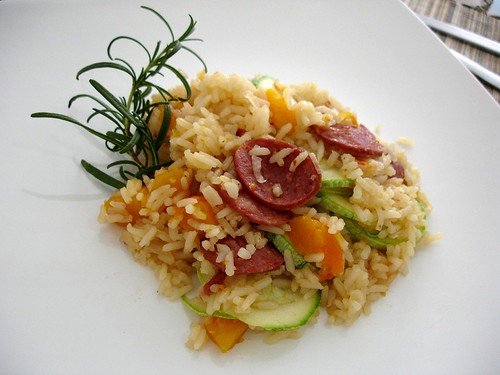
Autumn spicy rice
I know, I know, it’s not autumn anymore – and the hot days here in Sao Paulo keep me pretty aware of that… but being a rice lover it was impossible for me to resist this recipe.
I don’t eat meat and you know it – and even when I did, back in the day, I would never eat pork. It’s nothing religious or anything, I just don’t like it.
I always have chorizo sausages in the fridge since Joao loves them – there’s a kind called calabresa that is used in barbecues and also as a pizza topping. I decided to put my prejudices aside for a moment and try this recipe with the calabresa sausage. And I’m glad I did – the rice was packed with flavor and most of it due to that ingredient.
There’s no rosemary in this recipe – I just thought it would make the dish look prettier. :)

This is my entry for the Weekend Herb Blogging, this time hosted by Vani, from the blog Batasari.
One last thing: the results for this DMBLGIT (in which one of the judges was yours truly) are up - congratulations to all the winners!
Autumn spicy rice
from Donna Hay magazine
1 tablespoon olive oil
1 red onion, sliced
3 chorizo sausages, sliced
200g (7oz) butternut squash, peeled and chopped
½ teaspoon chilli flakes
2 cups long-grain rice
3 cups (24fl oz) chicken stock
2 zucchinis (courgettes), thinly sliced
Heat a deep frying pan over medium heat. Add the oil, onion, chorizo, squash and chilli and cook for 2-3 minutes or until the onions are soft. Add the rice and cook, stirring for 1 minute.
Add the stock and bring to the boil. Reduce the heat to low, cover with a tight-fitting lid and cook for 15 minutes or until the stock is absorbed and the rice is cooked. Stir through the zucchini and allow to stand for 2 minutes.
Serves 4
Tuesday, July 10, 2007
Vegetable crepes with cottage filling (and my eternal hate for Channel Fox)
That’s right, my dear readers. Channel Fox (Brazil) sucks, big time.
They have decided to air only dubbed movies and series - no more of my beloved original sound and subtitles that I decide to read whenever I want to.
I will never forgive Fox for making me watch the first episode of “Dexter” this way – btw, it is fantastic. I can’t wait to watch the next episode.
Back to food… These crepes are delicious! And they’re light – yep, healthy and NOT packed with thousands of calories. My type of food lately – so true that I had all 4 you see on the plate. :S
The batter is not thick as the usual crepe batter and I thought it would be difficult to transform it into crepes. Practice makes it perfect, though: my first crepe looked like a flower, there was nothing round about it… But after that first attempt I got to make the others without much trouble.
My opinion about the filling is that it’s OK, but the curry flavor is too overpowering (and I like curry). I liked the crepes so much that I have been thinking of making them again with a number of different fillings – use your imagination and you may end up liking this recipe as much as I did.
There were some crepes left and I had them later that day, cold, without filling. I told you I’d liked this recipe. :)
This is my entry for this Weekend Herb Blogging, hosted by the sweet and dear Susan.
Vegetable crepes with cottage filling
Weight Watchers Brazil
Crepes:
2 eggs
½ cup non-fat milk
5 tablespoons all-purpose flour
½ cup shredded/grated carrot
½ cup shredded/grated zucchini
4 tablespoons grated parmesan
salt
freshly ground black pepper
Filling:
¾ cup cottage cheese
½ teaspooon curry powder
1 tablespoon chopped chives
salt
freshly ground black pepper
Make the crepes: place the eggs, milk and flour in a blender and blend well. Add the remaining ingredients and mix well.
Heat a crepe pan over low heat until hot. Lightly coat with vegetable oil or cooking spray. Pour batter into the pan and tip to spread the batter to the edges. When bubbles form on the top and the edges are dry, flip over and cook until lightly browned on the other side and edges are golden. Repeat with remaining batter – you’ll have to get 8 crepes with this recipe. In order to achieve this number, I poured an almost full ¼ cup of batter into the pan.
Mix all the ingredients of the filling and spread small amounts of the mixture onto each crepe. Fold them as you wish and serve.
Serves 4.